Host Families and Local Coordinators: Why They Matter Most
The school gives a student an education. The host family and local coordinator give them a life. What each role does on F-1 and J-1, and why both matter so much.
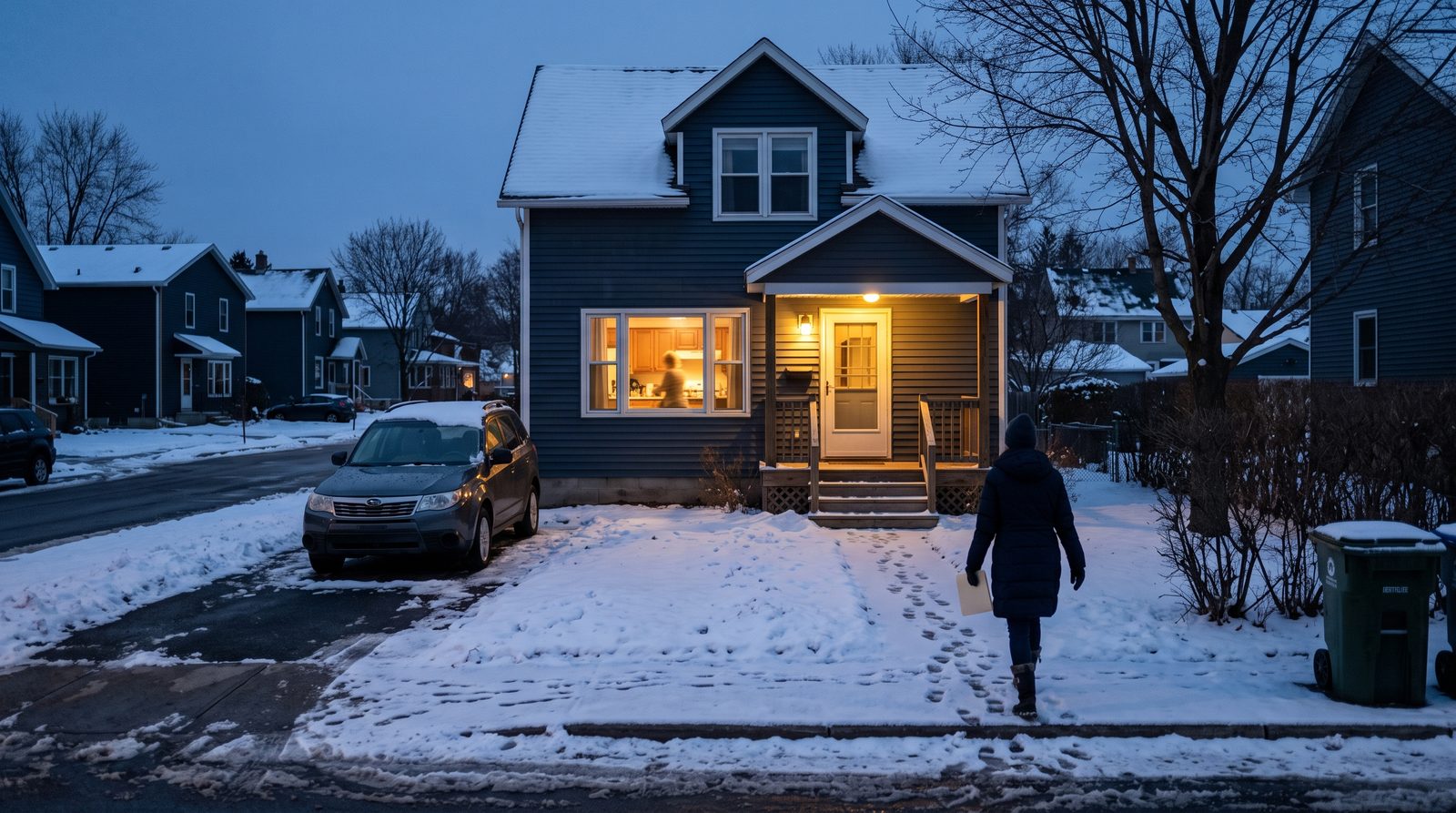
In an international high school placement, the host family is where the student lives and the local coordinator is the person who looks out for both of them. The school provides the education; these two roles decide whether the year works.
Families researching a study-abroad year spend most of their time on schools: the courses, the sports, the rankings. That's understandable. But ask anyone who has worked in exchange for long, and they'll say the same thing: the school is rarely why a year succeeds or fails. The home and the support around it are.
The two people closest to the student
A placement involves a lot of people: the student and their parents, an agency at home, the school, often a receiving organization in the U.S. Most of them are at a distance. Two are not.
| Host family | Local coordinator | |
|---|---|---|
| Where they are | The student's home for the year | Nearby, usually in the same town or region |
| Day to day | Meals, a room, routines, rides, family life | Regular check-ins with the student and the family |
| When something goes wrong | Usually the first to notice | The first person to call |
| What they bring | Belonging, language, everyday culture | Experience, judgement, a neutral voice |
| Who they answer to | The organization that placed the student | The organization they coordinate for |
A host family sees the student at breakfast and at bedtime. A coordinator sees the whole picture from a step back: the student, the family, the school and the program rules. Together they're the student's support system in a country where they know almost no one.
What a host family actually does
At its simplest, a host family gives a student a place to live. In practice it gives them far more than that.
A home, not a room. The student eats with the family, shares their routines, and is included in birthdays, holidays and ordinary evenings. Being folded into a real household is what turns a school year into a life abroad.
English that isn't taught in class. Dinner-table conversation, jokes, a younger sibling's homework, a grandparent's stories. Students living with a family tend to pick up everyday English faster than in any classroom, because they have to.
Culture from the inside. A student learns how Americans actually live: how a Thanksgiving table works, what a school football game feels like, what "we'll see" means from a parent. The family learns just as much in return.
Structure and care. Curfews, homework time, rides to practice, a doctor's appointment, someone who notices when a student has gone quiet. For a teenager far from home, that everyday care is protection as much as kindness.
How it works on F-1
On an F-1 visa, a student lives with a host family arranged by the school, a receiving organization, or a homestay company. There is no single federal rulebook for this housing. Federal guidance treats a school official's awareness of a minor's off-campus housing as a best practice, and says the rules on a school's responsibility for that housing vary by state or locality.
In practice that means the organization's own standard is the standard. Good programs screen and interview families, check backgrounds, visit the home, and assign a local coordinator. F-1 homestay also commonly includes a monthly stipend to cover the cost of hosting. The amount varies by organization and region, so ask the organization directly.
How it works on J-1
On a J-1 exchange, the rules are federal and detailed. The State Department's secondary school student regulations require sponsors to:
- interview all family members living in the home, in person
- run a criminal background check on every household member aged 18 and over
- give the student their own bed, which cannot be a sofa bed or an inflatable one, sharing a room with no more than one person of the same sex
- secure a host family placement before the student leaves home
And one difference matters above all: J-1 host families are volunteers. The regulations say sponsors may make no monetary payments or other incentives to host families. The State Department's J-1 program page adds that families provide three meals a day and transport to and from school activities.
Neither route is "better". They're built differently, and a family should know which one they're joining before they say yes.
What a local coordinator actually does
If the host family is the student's home, the local coordinator is the person who makes sure that home keeps working. Coordinators are often former host parents, teachers or parents who've been through exchange themselves.
A coordinator typically:
- Finds and prepares host families in their area, and helps match them with students
- Meets the student early, often in the first weeks, and keeps in regular contact through the year
- Checks in with the host family, sometimes by phone and sometimes in person
- Knows the school, and steps in when grades, attendance or a class schedule need attention
- Resolves the small things before they become big: a curfew argument, a misunderstanding over chores, a homesick month
- Handles the hard things when they happen: an emergency, a safety concern, a placement that isn't working
- Reports to the organization, so the program knows how each student is doing
On J-1, much of this is required by law. Coordinators must be trained in conflict resolution, emergencies and child safety, pass a criminal background check every year, live within 120 miles of the students they place, and keep a monthly schedule of contact with each student and host family, some of it in person. On F-1, the organization sets the standard, and the best ones mirror that level of care.
We go deeper on the role in what a local coordinator does.
Why they matter more than any other part of the placement
It's easy to see host families and coordinators as the logistics of a program: the housing and the check-ins. That undersells them badly.
They decide whether a student feels safe. A teenager thousands of miles from their parents needs adults they can trust, close by. That trust is built at the kitchen table and on the coordinator's visits, not in a brochure.
They catch problems early. Homesickness, a falling grade, a friendship that went wrong, a student who has stopped eating well. The people who see the student every day, and the person who checks in every month, spot these things weeks before anyone else could.
They turn a school year into a cultural exchange. The whole point of studying abroad is more than an education. It's another culture seen from the inside, friends in another country, and learning to understand and accept people who are different. Most of that happens at home, not in class.
They carry the relationship for life. Ask former exchange students what they remember, and it's rarely the school. It's the host mom's cooking, the host brother who drove them to practice, the coordinator who took them for coffee on the worst week of the year. Many of these relationships last decades.
When placements go wrong, the cause is usually a poor match, a family that wasn't prepared, or a coordinator stretched too thin. When they go right, it's almost always because of the people in this article.
What makes a great host family
There's no single profile. Great host families are couples, single parents, retirees, families with young children and empty nesters. What they share is harder to list on a form:
- Genuine interest in another culture, not just a spare room
- Patience with language, especially in the first months
- Clear, kind expectations about rules, chores and communication, set early
- Inclusion: the student is a member of the household, not a guest
- Willingness to call the coordinator early, before a small problem grows
Hosting is a real commitment of time and attention. It is also, for many families, the most rewarding thing they've ever done. We'll cover the practical side of preparing your home in upcoming posts.
What makes a great local coordinator
The best coordinators combine warmth with judgement. They like teenagers, they're calm in a crisis, and they're comfortable having honest conversations with host parents and students alike. They know their community: the schools, the counselors, the families who'd make good hosts. And they keep their caseload to a level where every student gets real attention. On J-1, the rules cap how far away placements can be and set a minimum contact schedule. The best coordinators treat those as a floor, not a ceiling.
How host families and coordinators are found today
Traditionally, host families and coordinators have been tied to one organization. A family signs up with one homestay company. A coordinator works for one receiving organization. If that organization has no students in the area this year, or isn't a good fit, the family or coordinator starts again from scratch with the next one: a new application, the same questions, the same paperwork.
That model has costs for everyone. Good families sit idle. Good coordinators support fewer students than they could. Students in their area go without the best available homes.
Where XportEdu fits
XportEdu was built so host families and coordinators aren't limited to a single organization. A host family or local coordinator completes one profile and one application that connected agencies and receiving organizations in their area can use. That means less repetition, more students within reach, and a real choice of who to work with.
It doesn't replace the checks. Each organization still interviews, screens and trains in the ways its program and the law require, and on J-1 those requirements are federal. What changes is that good people no longer have to start over for every organization, and organizations can find them more easily.
Search for organizations looking for host families and coordinators in your area is coming soon. Until then, receiving organizations on the platform can connect with families and coordinators who've applied. Our overview of who does what shows how every role fits together.
Frequently asked questions
What is the difference between a host family and a local coordinator? The host family is the household the student lives with for the year. The local coordinator is a separate person, usually living nearby, who supports both the student and the family, checks in regularly, and is the first call when something goes wrong.
Are host families paid? It depends on the route. On F-1, homestay commonly includes a monthly stipend, set by the organization and varying by region. On J-1, host families are volunteers: State Department rules say sponsors may make no monetary payments or other incentives to host families.
How are host families screened? On J-1, sponsors must interview every family member in person and run criminal background checks on all household members aged 18 and over, among other federal requirements. On F-1, screening is set by the organization and by state or local law, and good programs follow a similar standard.
How often does a local coordinator check in? On J-1, coordinators must keep a monthly schedule of contact with each student and host family, including in-person contact at set points in the year. On F-1, the organization sets the schedule.
Can a single person be a host family? Often, yes. On J-1, a single adult host parent without a child in the home goes through an extra review, and both the student and their parents must agree in writing. On F-1, it depends on the organization.
How do I become a host family or a local coordinator? Start with an organization that places students in your area. On XportEdu, you can complete one profile and application that connected organizations near you can use, instead of applying separately to each one.
The short version
The school gives a student an education. The host family gives them a home, and the local coordinator makes sure that home keeps working. They're the people who notice first, who make a student feel safe, and who turn a school year into a real cultural exchange. On F-1 their standards are set by the organization. On J-1 they're set in federal law, and host families are volunteers. Either way, they deserve more choice about who they work with, and students deserve the best of them.